ClickCease

HVAC Sanitizing.

EPA-registered antimicrobial treatment applied through the duct network after cleaning. Safe around children and pets once dry.

Clean Spaces Shine Brighter Relax Tomorrow
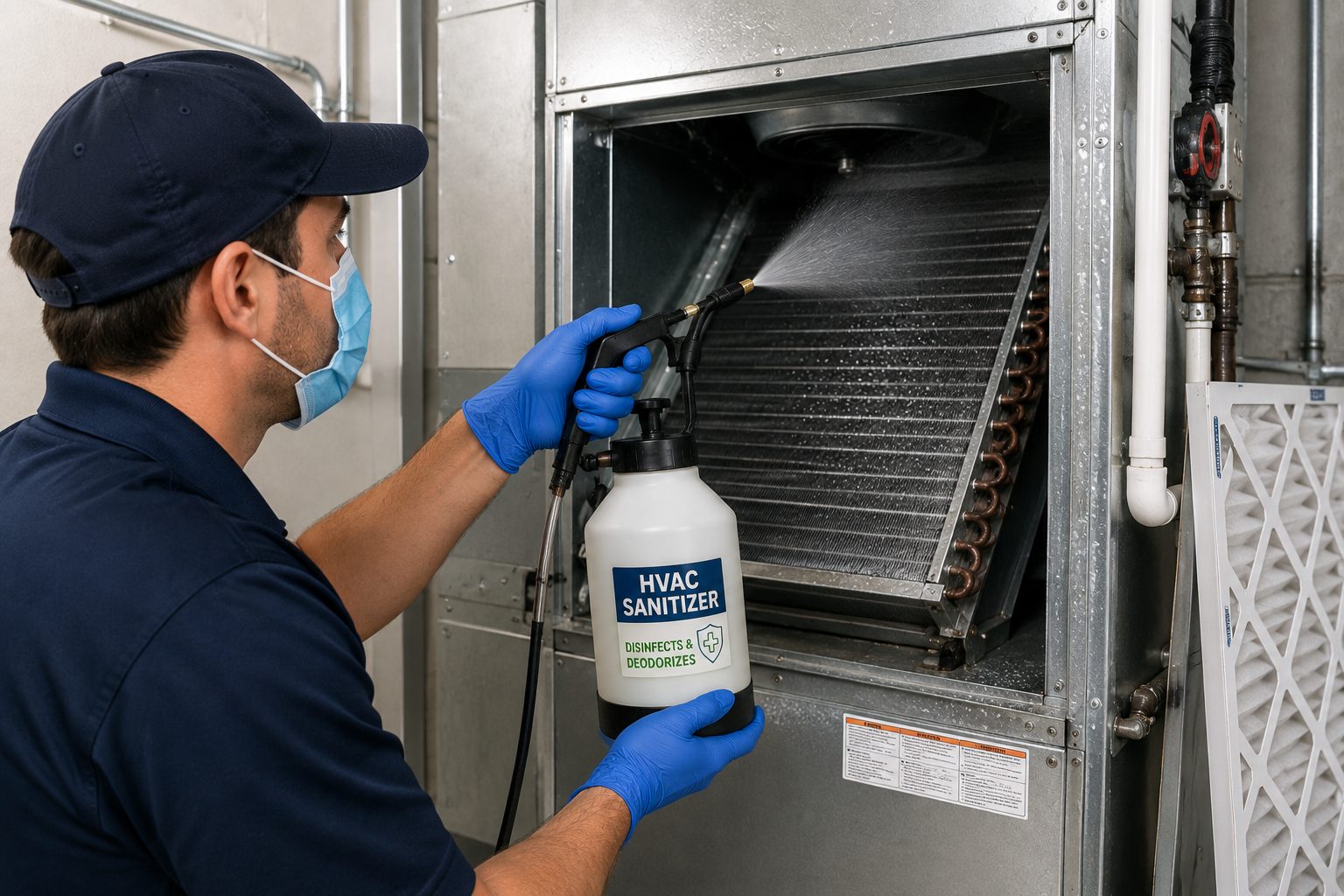
Technician spraying HVAC sanitizer onto an evaporator coil

What Sanitizing Adds.

Cleaning removes the debris. Sanitizing treats what the brushes cannot reach. After extraction we fog an EPA-registered antimicrobial through the supply and return network, coating the interior surfaces of the ductwork, the coil face and the drain pan area. It knocks down mould spores, bacteria and the organic film that causes that musty smell when the system first starts up.

Applied After Cleaning

Sanitizing a dirty duct simply coats the debris. We only apply treatment once the system has been mechanically cleaned and inspected.

Safe Once Dry

The products we use are EPA-registered for HVAC application. Normal occupancy resumes as soon as the system has dried, usually within a couple of hours.

When Sanitizing Is Worth It.

It is not needed on every job. We recommend it where there is visible microbial growth on the coil or duct interior, after water intrusion or flooding, in homes where someone has a respiratory condition or a compromised immune system, and in properties that have sat vacant with the system off through a humid Upstate summer. If none of that applies, we will tell you cleaning alone is enough.
After Water Damage

Any moisture reaching the duct interior creates conditions for growth within days. Treatment should follow proper drying, never replace it.

Respiratory Conditions

Households managing asthma, allergies or immune conditions see the most benefit, particularly through the high-pollen spring in the Upstate.

Ask whether sanitizing makes sense for your system. We will tell you honestly if it does not.

EPA-registered antimicrobial treatment applied through the duct network after cleaning. Safe around children and pets once dry.